How I revived a stalled ecosystem initiative, built a governance model from scratch, and tied design system adoption to measurable product ROI.
The Situation
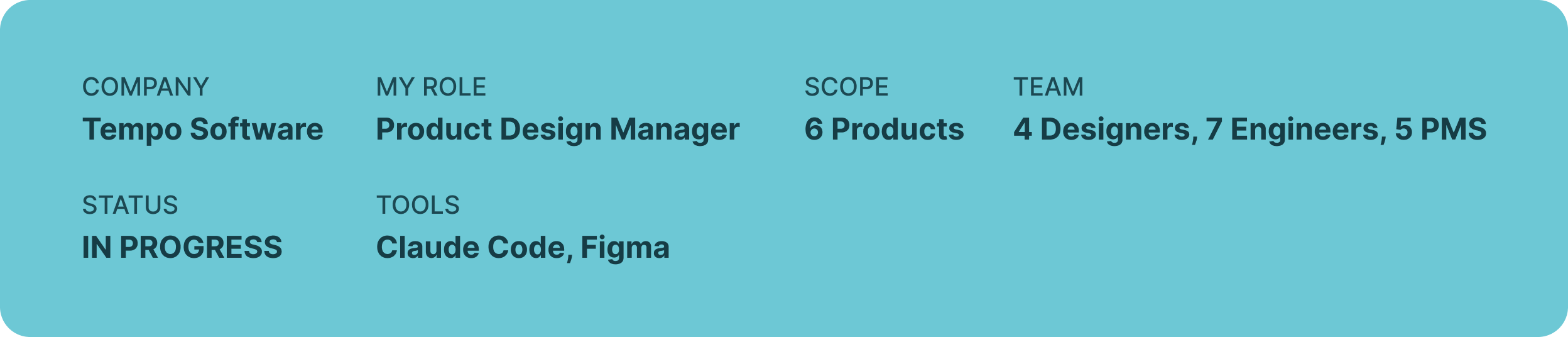
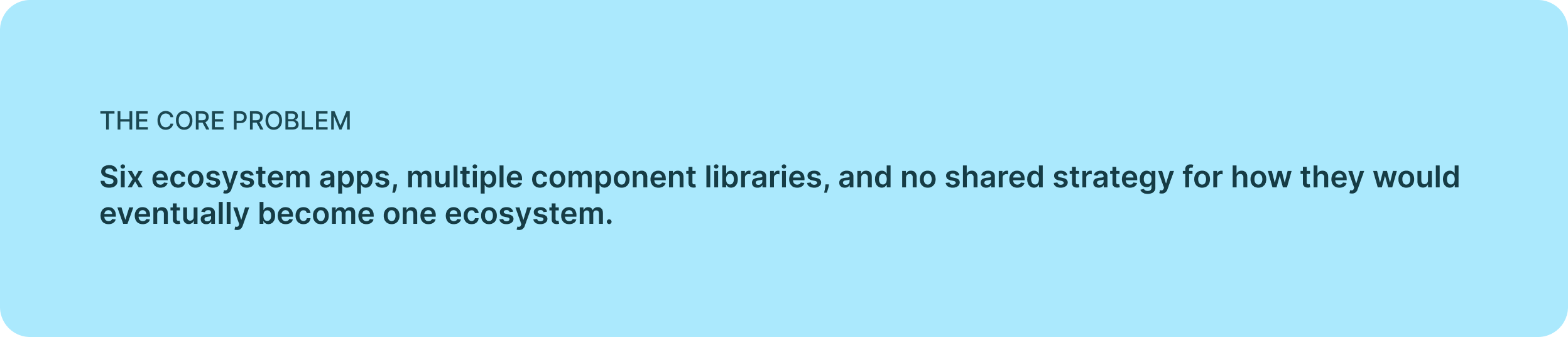
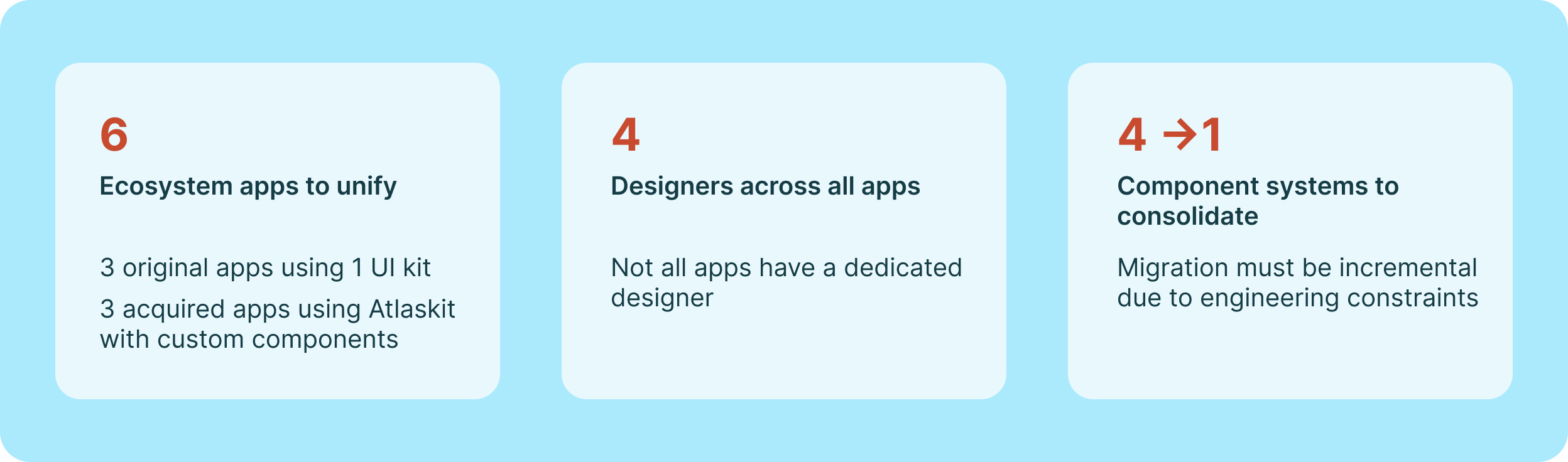
Tempo Software grew through acquisition. What began as three tightly-scoped Jira apps expanded into a product suite with 6 apps within the Atlassian ecosystem and 2 standalone apps. The original apps had been built on a proprietary UI kit. The acquired products used Atlaskit. No shared design language existed. No unified component library. No governance.
From a customer perspective, the differences were subtle but cumulative: inconsistent interaction patterns, visual mismatch across navigation and data surfaces, and no coherent sense that these products belonged to the same family. From an engineering perspective, teams were maintaining multiple component systems in parallel with no resolution in sight. From a business perspective, the fragmented ecosystem created real risk: a signal to prospective partners and investors that the portfolio lacked cohesion.
How We Got Here
The Inheritance
The unification effort had been attempted before I owned it. As a Senior IC, I collaborated on early groundwork alongside a designer who was nominally leading the initiative. When that designer left, the project lost its owner and quietly died. No documentation. No roadmap. No stakeholder alignment.
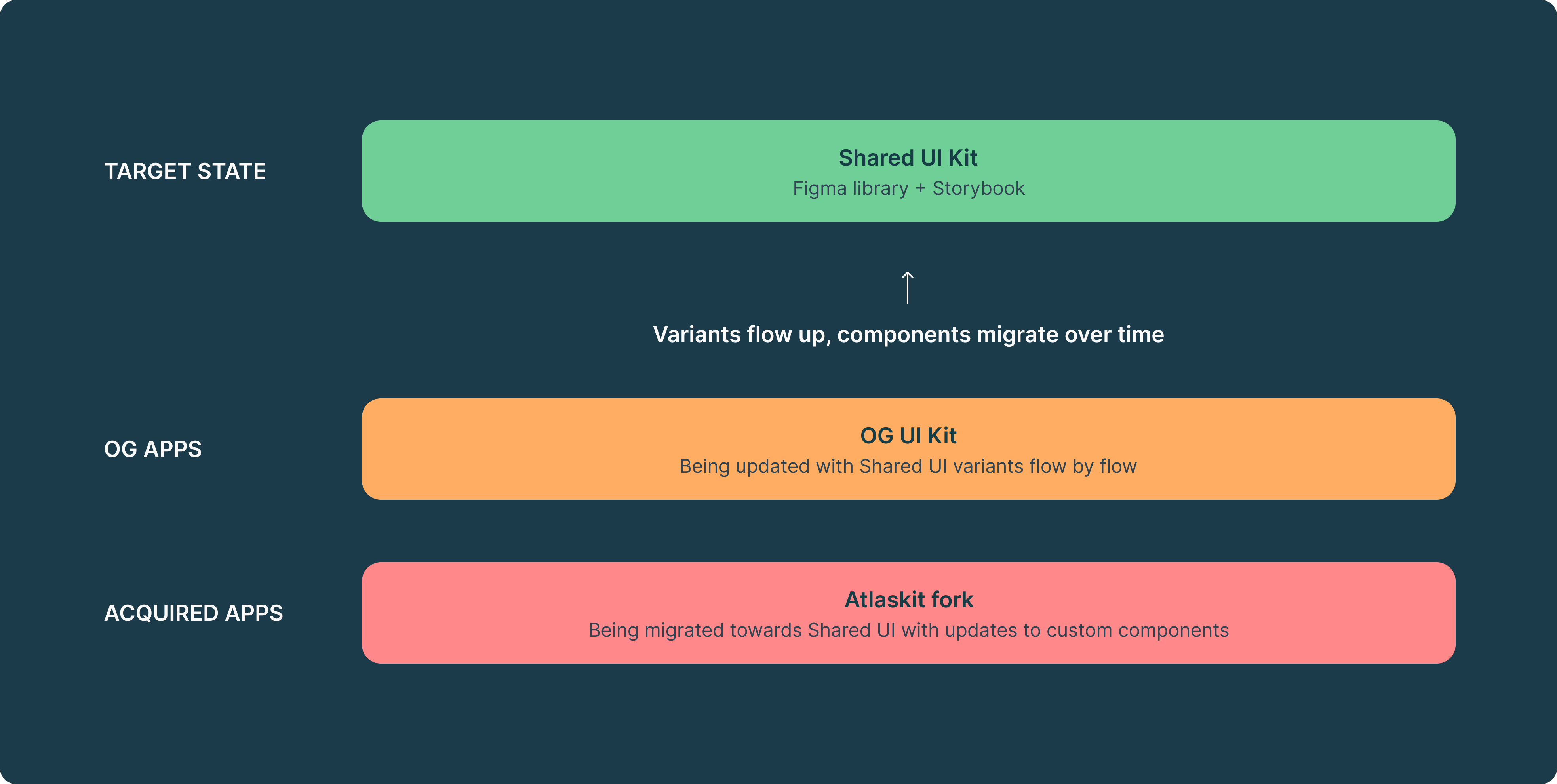
The Shared UI kit a Figma library paired with a coded component library in Storybook built on shadcn, existed in partial form. It had potential, but no adoption strategy and no governance model to maintain it.
the revival
When I moved into a management role, I saw an opportunity to restart the initiative, this time with the strategic framing it had always lacked. The internal goal was clear: the company had ambitions for growth, and a product suite that looked like separate apps rather than one platform was a real obstacle to that goal.
I chose not to reframe this as a design debt story. Design debt doesn’t move PMs or executives. Business outcomes do. I positioned the unification work as a prerequisite for feature quality and customer retention, and tied each redesign effort to a product roadmap priority that already had stakeholder buy-in.
Working with real world constraints
The external constraint: Atlassian ecosystem, independent brand
These products live in the Atlassian marketplace, which creates natural pressure to align with Atlaskit’s visual language. But Tempo’s strategic direction is toward platform independence: building a product identity that can stand on its own outside the Atlassian ecosystem. That means Shared UI must be distinctly Tempo’s, not a derivative of Atlaskit.
The internal constraint: roadmap dominates capacity
Product PMs prioritize retention features. Design system work competes for the same engineering and design time. Any strategy that couldn’t demonstrate near-term product value was going to lose that competition every time.
The Strategy: Flow-First, real ROI
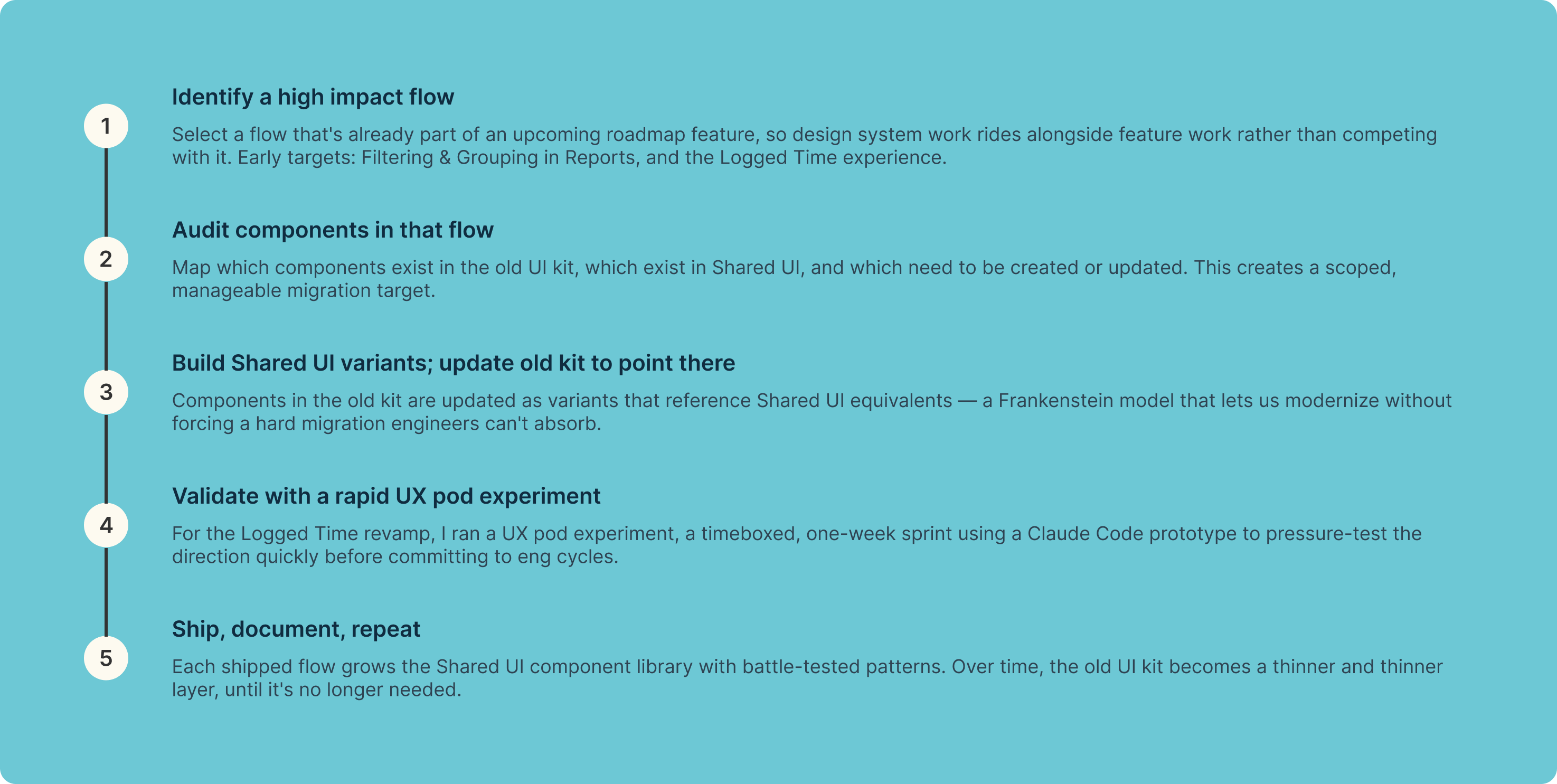
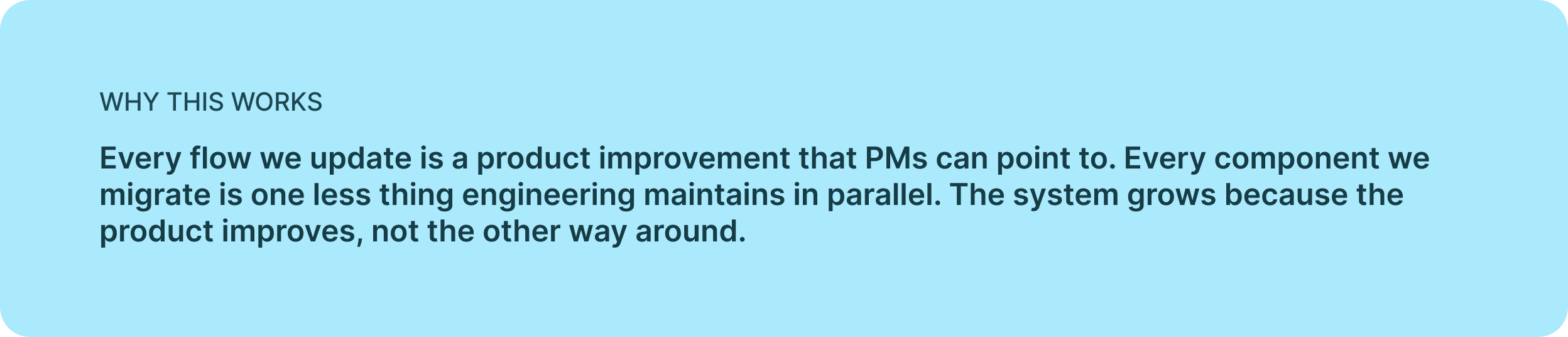
Rather than rebuilding the component library in isolation and expecting teams to adopt it, I took the opposite approach: start with a real product flow, update the components that live in that flow, and let the system grow from real product work.
System Architecture
The current state is iteration based and transitional. Three layers co-exist, but the direction is clear.
 Nicole Merchant